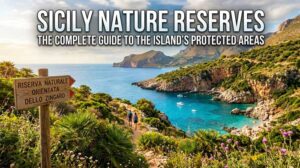
Sicily has 1,500 kilometres of coastline and approximately every type of Mediterranean beach that exists: fine white sand, volcanic black sand, turquoise limestone coves, pebble beaches with exceptional clarity, marine reserve waters with the deepest visibility in Italy and sheltered family bays a five-minute walk from a medieval Norman cathedral. The challenge for the visitor is not finding a beach they are everywhere but finding the right beach for the right reason at the right time.
This guide organises the finest beaches in Sicily by zone and by type, with honest guidance on what each area offers, when to go and which beaches require a specific effort to reach and why that effort is worthwhile. It links to the complete beach and destination guides for each area, so you can plan the full experience rather than just the swimming.
In this guide
- Northwestern coast San Vito Lo Capo and the Zingaro
- Egadi Islands the clearest water in Sicily
- Northern coast Cefalù and Mondello
- Northeastern coast Taormina and Isola Bella
- Aeolian Islands volcanic beaches
- Southeastern coast Vendicari, Marzamemi and the Val di Noto shore
- Southern coast Scala dei Turchi and Agrigento
- Best beaches by type
- Practical tips
- FAQ
Sicily beaches quick reference by type
- Finest white sand: San Vito Lo Capo (northwestern coast)
- Best for families: San Vito Lo Capo, Mondello, Cefalù, Mazzarò (Taormina)
- Clearest water: Egadi Islands (Favignana Cala Rossa), Ustica, Marettimo
- Most dramatic natural setting: Scala dei Turchi (white eroded marl cliffs), Stromboli black sand
- Most unspoilt: Vendicari (Calamosche), Zingaro Reserve coves, Marettimo
- Best for snorkelling: Egadi Islands, Isola Bella (Taormina), Zingaro coves
- Best for couples: Marzamemi, Cefalu by night, Ortigia seafront, Panarea (Aeolian)
- Volcanic beach experience: Stromboli, Vulcano, Linosa
Northwestern Coast San Vito Lo Capo and the Zingaro
San Vito Lo Capo is the finest sandy beach in western Sicily a 3-kilometre arc of fine white sand, exceptional even by Sicilian standards for the grain size and colour, backed by the limestone mass of Monte Monaco and bordered by the crystal-clear Tyrrhenian Sea. The town of San Vito Lo Capo behind the beach has a specific character of a working seaside resort that has not entirely surrendered to the tourist economy: the fish couscous tradition is genuine (this is the host town of the annual Cous Cous Fest, one of Italy’s largest food festivals), and the family-run hotels and restaurants on the beachfront provide a warmth that the more polished Sicilian resort towns sometimes lack. Read our complete San Vito Lo Capo guide.
Eight kilometres south of San Vito Lo Capo, the Riserva Naturale dello Zingaro provides a completely different beach experience 7 kilometres of protected coastline accessible only on foot, with five coves of clear water and no permanent development. The Cala Capreria and Cala dell’Uzzo are the finest individual coves; the Scopello entrance, with the 16th-century tonnara and the limestone faraglioni in the bay below, is the most photographically dramatic approach. Read our complete Zingaro guide.
Egadi Islands the Clearest Water in Sicily
The Egadi Islands Favignana, Levanzo and Marettimo are the westernmost islands of Sicily, 15 kilometres off the Trapani coast, and the waters of their Marine Protected Area have the highest clarity of any beach environment in Sicily. The Cala Rossa on the eastern coast of Favignana is the most celebrated single beach location in the Egadi a former tuff quarry bay where the pale rock beneath the shallow water produces a specific turquoise colour that photographs with the visual quality of the Caribbean. The Cala Azzurra on Favignana’s south coast and the sea caves and coves of Levanzo are equally exceptional. Marettimo, the most remote of the three, has the finest snorkelling and diving in the archipelago, with underwater visibility reaching 40 metres. Read our complete Favignana guide.
👉 EGADI ISLANDS DAY CRUISE FAVIGNANA AND LEVANZO FROM TRAPANI
A full-day guided boat tour of the Egadi Islands from Trapani Favignana’s Cala Rossa, Levanzo’s sea caves and the clearest snorkelling water in Sicily. Lunch on board, multiple swimming stops in the Marine Protected Area. The finest beach day available in western Sicily.
👉SEE THE BEST EGADI ISLANDS DAY CRUISE HERE
Northern Coast Cefalù and Mondello
The northern Tyrrhenian coast provides the finest combination of town beach and cultural destination in Sicily. Cefalù’s Lungomare is a 1.5-kilometre sweep of genuine fine golden sand rare on the northern coast, which is predominantly pebble immediately below the historic centre and the Norman cathedral, with the limestone mass of La Rocca rising 268 metres directly above. The specific view from the water looking back at the cathedral towers and La Rocca provides one of the most dramatic beach backdrops in the Mediterranean. Read our complete Cefalù beach guide.
Mondello, 10 kilometres north of Palermo, is the finest accessible city beach near the Sicilian capital a long arc of white sand in a sheltered bay below Monte Pellegrino, with the Art Nouveau villas of the early 20th-century resort district providing a specific architectural character. Accessible by bus 806 from central Palermo in 30 minutes and the most practical beach option for visitors based in the city. Read our complete Mondello guide.
Northeastern Coast Taormina and Isola Bella
The Taormina coastline below the clifftop town offers some of the finest Ionian beach experiences on the eastern Sicilian coast, with Mount Etna visible across the bay and the Greek theatre above. Isola Bella the small nature reserve island connected to the mainland by a sandbar at Mazzarò is the most photographed beach in eastern Sicily and one of the finest marine reserve snorkelling locations on the island, with water clarity of 8 to 12 metres and abundant Mediterranean marine life in the rocky seabed around the island. The cable car from Taormina town to the Mazzarò beach below is a specific pleasure of visiting this stretch of coast. Read our complete Taormina beach guide.
Further north toward Messina, the Giardini Naxos bay provides a longer, more accessible beach option than the Mazzarò coves, with direct beach access and a more local atmosphere than the tourist-focused Mazzarò area. The stretch of coast around Capo d’Orlando and the Patti gulf has some of the quieter sandy beaches of the northeastern coast, largely unknown to visitors based in Taormina.
Aeolian Islands Volcanic Beaches
The Aeolian Islands provide a beach experience entirely unlike anything on mainland Sicily volcanic black sand beaches, pumice-white rock beaches, thermal water entries where the sea is warm even in October and the occasional visible volcanic fumarole on the seabed. Stromboli’s black sand beach below the volcano is the most dramatically positioned beach in the entire island chain: swimming at the base of Europe’s most continuously active volcano with the summit craters visible above. Vulcano’s Spiaggia Sabbie Nere (Black Sands Beach) combines thermal waters with the volcanic black sand for a swimming experience that is specifically healing for skin conditions. The white pumice beaches of Lipari and Salina are entirely different in character pale, bright and photogenic against the deep Tyrrhenian blue. Read our complete Aeolian Islands guide.
Panarea is the smallest and most exclusive island of the archipelago limited vehicle access, genuine seclusion and some of the finest small coves in the Tyrrhenian. The Spiaggia Zimmari on the eastern coast of Panarea is the finest sandy beach on the island, accessible on foot from the village. A day trip to Panarea from Lipari for the beach and the aperitivo at sunset is among the most sought-after Aeolian Islands experiences.
Southeastern Coast Vendicari, Marzamemi and the Val di Noto Shore
The southeastern Sicilian coast between Syracuse and Cape Passero is one of the most consistently underestimated beach zones in the island a stretch of Ionian coastline with shallow turquoise water, fine sand and the specific combination of unspoilt landscape and archaeological heritage that the more popular Tyrrhenian and eastern Ionian coasts cannot always provide.
The Calamosche beach at the Vendicari Nature Reserve is consistently voted among the finest beaches in Italy a sheltered sandy cove accessible only via a 20-minute walk through the nature reserve (which protects coastal lagoons, scrubland and the ruined 18th-century tonnara visible from the shore) with no permanent facilities and no development visible from the water. The combination of the walk, the solitude and the specific quality of the beach when you arrive makes it one of the most rewarding beach experiences in Sicily. Read our complete Vendicari guide.
Marzamemi, 10 kilometres further south, provides the most atmospheric small beach village on the southeastern coast the fishing harbour, the historic tonnara buildings and the Piazza Regina Margherita provide an evening context for a beach day that the larger resort towns cannot match. The coast between Noto and Capo Passero has several further beaches (Eloro, Marianello) that are largely unknown to non-Sicilian visitors and provide the specific pleasure of a fine beach without any tourist infrastructure at all. Read our complete Marzamemi guide.
Southern Coast Scala dei Turchi and Agrigento
The southern Sicilian coast between Agrigento and Sciacca contains the most dramatically geological beach landscape on the island. The Scala dei Turchi an outcrop of white eroded marl (the same calcarenite formation that underlies the Valley of the Temples a few kilometres east) descending in natural stepped formations to a sandy beach and the Tyrrhenian Sea is one of the most photographed natural formations in Sicily. The white of the eroded cliff against the blue of the sea and the specific quality of the evening light on the marl surface creates a visual combination that is entirely specific to this location and irreproducible elsewhere in Italy. Access involves a reservation and an entry fee system (check current conditions before visiting). Read our complete Scala dei Turchi guide.
The beaches east and west of Agrigento provide long stretches of sandy coast that are significantly quieter than the famous Sicilian beach destinations the San Leone beach immediately below Agrigento town, the Siculiana Marina beach 15 kilometres west, and the Eraclea Minoa beach (adjacent to a minor Greek archaeological site, with white sand dunes and pines behind the beach) provide the closest access to the Valley of the Temples archaeological zone for visitors who want to combine archaeology and beach in a single Agrigento day. Read our complete Agrigento guide.
👉 CEFALÙ BOAT TOUR SEA CAVES, HIDDEN COVES AND THE CATHEDRAL FROM THE SEA
A guided boat tour of the Cefalù coastline the Grotta delle Colombe sea cave, the Settefrati sea stacks and the view of the Norman cathedral and La Rocca from 500 metres offshore. Swimming stops in hidden coves accessible only from the sea. The finest coastal experience on the northern Sicilian coast.
👉SEE THE BEST CEFALÙ BOAT TOUR HERE
Best Beaches by Type
Best beaches for families with young children
San Vito Lo Capo (shallow, sandy, sheltered), Mondello (accessible from Palermo by bus, shallow and clean), Cefalù Lungomare (5 minutes’ walk from the historic centre, gentle entry), Mazzarò at Taormina (calm, sheltered Ionian cove).
Best beaches for snorkelling
Cala Rossa on Favignana (Egadi Islands, 30-metre visibility), Isola Bella (Taormina, marine reserve, abundant fish life), Zingaro coves (particularly Cala Capreria), Ustica island (Italy’s first marine reserve, finest underwater environment near Palermo).
Best unspoilt beaches
Calamosche at Vendicari (no development, accessible only on foot), Zingaro Reserve coves (no vehicles, no facilities), Marettimo in the Egadi (most remote island, least visited), Eloro near Noto (minor Greek site, pine trees, natural dunes).
Best beaches for the “wow” factor
Scala dei Turchi (the white eroded marl cliff), Cala Rossa on Favignana (the turquoise intensity), Stromboli black sand beach (the active volcano above), Isola Bella (the island connected by a disappearing sandbar with Etna behind).
Best beaches for water sports
San Vito Lo Capo and Capo d’Orlando (windsurfing and kitesurfing), Mondello (windsurfing), the beaches east of Catania (surfing when the sirocco wind generates swell), Mazzarò and Isola Bella (snorkelling and kayaking).
👉 RENT A CAR
The finest beaches in Sicily the Zingaro Reserve, Vendicari, the Scala dei Turchi, San Vito Lo Capo and the Egadi Islands ferry port at Trapani all require a rental car to reach. Compare prices at Palermo and Catania airports and book in advance for the best rates.
👉COMPARE THE BEST RENTAL CARS HERE
Practical Tips for Sicily’s Beaches
The best beach season in Sicily runs from mid-June through September, with the peak of warmth in July and August and the finest overall conditions (warm sea, reduced crowds, ideal light) in September. The sea temperature peaks at 27 to 28 degrees Celsius in August; in September it remains at 24 to 26 degrees while the air temperature drops to a more comfortable 25 to 28 degrees for daytime activity.
July and August are peak season at all the major beaches San Vito Lo Capo, Cefalù, Mondello and Mazzarò at Taormina are all crowded on summer weekends, with the free sections of the main beaches filling by 9am. The solutions: arrive before 9am, visit on weekdays rather than weekends, choose the less-known beaches (the Egadi Islands, Vendicari, the southeastern coast) that attract fewer day-trippers, or use a lido (private beach club with sun lounger and umbrella rental) where guaranteed space compensates for the €15 to €25 daily cost.
Water quality across Sicily is generally excellent the major beaches hold Blue Flag certification and the marine reserves have the finest water quality in the Italian seas. The main beaches are monitored weekly in season; the wild beaches (Vendicari, Zingaro, the Egadi coves) have pristine water as a consequence of the absence of development and controlled access. Read our complete best time to visit Sicily guide for the full seasonal picture.
Frequently Asked Questions about Sicily’s Beaches
Which is the best beach in Sicily?
There is no single best beach the answer depends on what you are looking for. For the finest white sand: San Vito Lo Capo. For the clearest water: Cala Rossa on Favignana or the Marettimo beaches. For the most dramatic natural setting: Scala dei Turchi or Stromboli. For the most beautiful unspoilt beach: Calamosche at Vendicari. For the most accessible town beach: Cefalù or Mondello.
Are beaches in Sicily sandy or rocky?
Both, depending on the area. The northwestern coast (San Vito Lo Capo, Mondello) and the southeastern coast (Vendicari, Marzamemi) have the finest sandy beaches. The northeastern coast (Taormina area) is predominantly pebble and rocky with sandy sections. The Aeolian Islands have volcanic black sand and rocky entries. The Egadi Islands have a mixture of sand and limestone rock. The Zingaro Reserve coves are mostly rocky with pebble sections.
When is the best time to visit Sicily’s beaches?
September is the finest month the sea is at its warmest from the summer, the crowds are dramatically reduced from the August peak and the weather is settled and warm without the extreme heat of July and August. May and June are excellent for the quietest conditions and the clearest water, with the sea slightly cooler (22 to 24 degrees) than peak summer.
Are there free beaches in Sicily?
Yes all beaches in Italy have a legally mandated free public section (spiaggia libera) adjacent to any private lido operations. The Zingaro Reserve, Vendicari and most of the smaller beaches are entirely free. The major resort beaches (San Vito Lo Capo, Mondello, Mazzarò) have both free sections and lido sections; the free sections fill first in peak season.
The Island That Surrounds Itself with Sea
Sicily is surrounded on all sides by different seas the Tyrrhenian to the north, the Mediterranean to the south, the Ionian to the east and each has a distinct character. The Tyrrhenian northwest provides the clearest sand and the most sheltered family conditions. The Ionian east provides the volcanic drama and the marine reserves. The Mediterranean south provides the most undeveloped coastline and the most dramatic natural geology. The offshore islands the Egadi, the Aeolian, Ustica, Pantelleria provide the finest water and the most complete escape from the mainland. A Sicily beach itinerary that covers all four coastlines is a different trip each time you face a different sea.
For the complete beach planning picture, read our guides to Cefalù, Mondello, Taormina, San Vito Lo Capo, Favignana, Vendicari, Zingaro and the Aeolian Islands.
Did this guide help you plan your Sicily beach days? Save it to Pinterest or share it with someone choosing between the Tyrrhenian and the Ionian.