Sicily has one of the most extensive and most varied systems of protected natural areas in Italy reflecting the extraordinary ecological diversity of an island positioned at the intersection of the African and European biogeographical zones, with habitats ranging from active volcanic slopes to Mediterranean coastal scrubland, limestone karst canyons, mountain beech forests and marine protected areas of exceptional clarity. The network includes two regional natural parks (the Parco delle Madonie and the Parco dei Nebrodi), the UNESCO World Heritage volcanic zones of Etna and the Aeolian Islands, 76 nature reserves (riserve naturali) of various classifications and 4 marine protected areas. This guide covers the most significant and the most visitor-accessible reserves with the practical information needed to visit each one.
In this guide
- Zingaro Nature Reserve
- Vendicari Nature Reserve
- Parco delle Madonie
- Parco dei Nebrodi
- Parco dell’Etna
- Pantalica and the Anapo Valley
- Alcantara Gorge Reserve
- Cava d’Ispica
- Marine protected areas
- Lo Stagnone di Marsala
- Practical information
- FAQ
Zingaro Nature Reserve
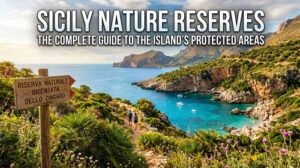
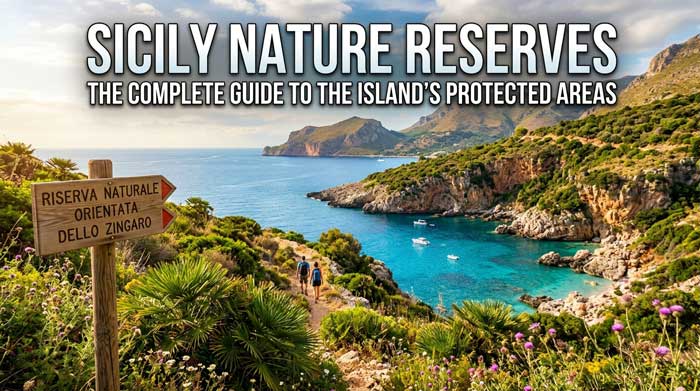
The Riserva Naturale dello Zingaro the 7-kilometre stretch of undeveloped limestone coast between San Vito Lo Capo and Scopello in the Trapani province is the most celebrated nature reserve in Sicily and the reserve that most directly communicates the specific quality of the Sicilian coastal landscape to a visitor encountering it for the first time. The Zingaro was established in 1981 as the first nature reserve in Sicily, after a celebrated popular protest that blocked the construction of the coastal road that would have opened the area to vehicle traffic the founding story of the Sicilian nature conservation movement, as culturally significant as the reserve itself.
The coastal trail connects the northern (San Vito Lo Capo side) and southern (Scopello side) entrances in approximately 2.5 to 3 hours of easy walking, with five coves accessible from the trail (Cala dell’Uzzo, Cala Capreria, Cala Marinella, Cala Berretta and Cala Tonnarella dell’Uzzo) that provide the finest natural sea swimming in the reserve. The spring wildflower programme (the Mediterranean scrubland in full flower from March through May), the breeding peregrine falcon on the coastal cliffs, the bonelli’s eagle and the endemic coastal plant community make the Zingaro the finest combined wildlife and landscape experience on the island. Entry fee: approximately €5 per person. Read our complete Zingaro guide.
Vendicari Nature Reserve
The Riserva Naturale di Vendicari the 1,512-hectare coastal wetland reserve on the southeastern Sicilian coast between Noto and Pachino is the finest birdwatching destination in Sicily and the most ecologically significant coastal wetland in the island. The reserve protects the coastal lagoon complex (the tonnara di Vendicari, the ancient tuna trap buildings surrounded by the brackish lagoons), the sand dunes, the Posidonia seagrass meadows and the Mediterranean scrubland that together provide the habitat for the extraordinary migratory and resident bird assemblage that makes Vendicari internationally known among ornithologists.
The flamingo population (at its maximum of 500 to 800 birds from October through March), the migratory waders and waterfowl (the autumn migration concentrations of curlew sandpiper, little stint, black-tailed godwit and dozens of other wader species), the breeding little egret and night heron colonies and the overwintering osprey and marsh harrier programme together make the Vendicari bird list one of the most species-rich of any Italian coastal reserve. The coastal trail (approximately 8 kilometres return) is the primary visitor access; the entrance near Eloro provides the most direct access to the main lagoon area. Entry is free. Read our complete Vendicari guide.
👉 SICILY NATURE RESERVES TOUR ZINGARO, VENDICARI AND THE FINEST PROTECTED LANDSCAPES
A guided tour of Sicily’s finest nature reserves the Zingaro coastal trail, the Vendicari flamingo lagoons and the Madonie mountain programme. Expert naturalist guides. Spring (April to May) for wildflowers and breeding birds; autumn (October to November) for migration and maximum flamingo numbers. Available from Palermo, Catania and Syracuse.
👉SEE THE BEST ZINGARO TOUR HERE
Parco delle Madonie
The Parco Regionale delle Madonie the 40,000-hectare regional park in the mountain range between Palermo and Cefalù is the most biodiverse terrestrial protected area in Sicily and the primary habitat for the Sicilian endemic plant and animal communities of the island’s highest non-volcanic mountains. The Madonie reach 1,979 metres at Pizzo Carbonara, the second highest peak in Sicily after Etna, and the altitudinal range from the coastal foothill zone to the summit produces a vegetation sequence from the Mediterranean maquis through the mixed oak woodland, the chestnut and hazelnut orchards, the beech forest and the alpine grassland that provides the richest habitat mosaic in the Sicilian mainland landscape.
The Piano Battaglia plateau (1,600 metres, accessible by road from Petralia Sottana) is the most species-rich single site for endemic orchids in Sicily up to 30 orchid species in a single April or May morning walk. The Castelbuono area is the primary base for Madonie tourism the medieval village with the castle, the mushroom festival in October and the specific quality of the mountain town as a base for the park programme. The Nebrodi-Madonie raptor programme includes the breeding Bonelli’s eagle, the short-toed eagle, the peregrine falcon and the red kite. Park information and trail maps at the Castelbuono visitor centre. Entry to the park is free; some specific sites have access fees. Read our complete mountain villages guide.
Parco dei Nebrodi
The Parco Regionale dei Nebrodi the 85,000-hectare regional park stretching from the Tyrrhenian coast to the Etna massif across the central Sicilian mountain range is the largest terrestrial protected area in Sicily and the park with the most intact forest ecosystem on the island. The Nebrodi range (maximum altitude 1,847 metres at Monte Soro) supports the most extensive beech forest in Sicily, the most significant population of the Sicilian wildcat and the most diverse breeding raptor assemblage in the island’s interior.
The specific Nebrodi ecological character: the higher rainfall of the northern-facing Nebrodi slopes (significantly wetter than the Madonie and the Sicilian interior due to the exposure to the northern maritime air masses) produces the more luxuriant forest cover and the more productive mushroom fruiting season the Nebrodi porcini, chiodini and ovuli are the most celebrated wild mushrooms in Sicily, and the October mushroom season brings the most intense concentration of culinary and natural tourism to the park. The Nebrodi black pig (the semi-wild native breed that forages on the Nebrodi oak and chestnut forest) is the park’s most specifically agricultural product and the primary ingredient of the Nebrodi mountain kitchen programme at the park’s agriturismo establishments. Park entry is free. Read our complete Sicily hiking guide.
Parco dell’Etna
The Parco Regionale dell’Etna the 59,000-hectare regional park encompassing the entire Etna volcanic cone and its surrounding territory is the UNESCO World Heritage Site (2013) that protects the most continuously active volcanic system in Europe and the most geologically significant landscape in Sicily. The park’s altitudinal range (from 500 metres to 3,357 metres at the current summit) produces a vegetation sequence from the vineyard zone through the chestnut and beech forest to the alpine zone and the volcanic desert, with the Etna birch (Betula aetnensis, the tree endemic to Etna) as the most specifically protected plant species.
The visitor programme: the cable car on the southern slope (from the Rifugio Sapienza at 1,900 metres to the upper cable car station at 2,500 metres, then jeep transfer to 2,900 metres), the guided summit walk to the active crater rim and the specific Etna landscape experiences (the lava tube caves, the Valle del Bove collapsed caldera viewpoint, the Etna birch forest walks) together constitute the most varied and the most dramatically atmospheric single national park programme in Italy. The Etna northern slope (accessible from Piano Provenzana) provides the quieter and less tourist-intensive alternative to the southern slope cable car programme. Read our complete Etna guide.
Pantalica and the Anapo Valley
The Riserva Naturale di Pantalica, Valle dell’Anapo e Torrente Cava Grande the UNESCO World Heritage Site (2005) protecting the prehistoric necropolis canyon and the surrounding river valley is the most historically and ecologically significant inland nature reserve in southeastern Sicily. The 5,000 rock-cut tombs of the Pantalica culture (13th to 7th centuries BC) carved into the canyon walls provide the most extensive prehistoric cemetery site in the Mediterranean; the canyon itself (the deep valley carved by the Anapo River through the Hyblaean limestone plateau) provides the most dramatically atmospheric landscape in the Sicilian interior.
The canyon trail (approximately 14 kilometres return from the Sortino entrance) passes through the surviving Byzantine cave churches and Norman-period cave dwellings carved into the canyon walls alongside the prehistoric tombs, providing the most compressed single-trail archaeological sequence available in Sicily. The Anapo River provides freshwater bathing in the canyon bottom the most specific natural swimming experience in the southeastern Sicilian interior, cool even in August when the rest of the island is 35 degrees. Entry is free. Read our complete Syracuse guide.
Alcantara Gorge Reserve
The Parco Fluviale dell’Alcantara the nature reserve protecting the Alcantara River gorge on the Etna northeastern flank is the most accessible geological nature reserve in eastern Sicily and the most dramatic example of columnar basalt jointing available without ascending the Etna summit. The gorge (20 to 25 metres deep in its narrowest sections, with vertical walls of hexagonal basalt columns rising on both sides) is accessible on foot with rubber boots in the river from the reserve entrance on the SS185, approximately 30 kilometres from Taormina.
The reserve extends along the Alcantara River valley from the gorge section downstream the wider valley with the citrus orchards, the olive groves and the specific agricultural landscape of the Etna northeastern foot provides a pleasant walking circuit above the gorge. The reserve entrance at Motta Camastra provides the standard gorge access; the boat descent through the gorge (available in summer from the lower sections) provides the most dramatic single perspective on the basalt column walls. Entry fee: approximately €5 for the standard gorge access. Read our complete day trips from Taormina guide.
Cava d’Ispica
The Cava d’Ispica the 13-kilometre limestone canyon in the Ragusa province containing one of the most extraordinary concentrations of prehistoric, Byzantine and medieval cave dwellings in the Mediterranean is the most archaeologically significant nature reserve in southeastern Sicily. The canyon walls are honeycombed with cave dwellings, rock-cut tombs, Byzantine cave churches and Norman-period settlement structures spanning 4,000 years of continuous human habitation in the same geological feature.
The most significant single site: the Catacombs of Larderia (4th to 5th century AD, the largest early Christian catacomb complex in Sicily outside Syracuse) carved into the canyon wall at the northern end of the accessible section. The canyon walk (approximately 8 kilometres through the accessible section) combines the archaeological programme with the specific karst landscape ecology the riparian vegetation of the canyon bottom, the maquis scrubland of the canyon rim and the specific cave-associated fauna (the horseshoe bats in the larger cave chambers, the cave swallow nesting colonies on the canyon walls). Entry fee: approximately €4 for the northern section with the catacombs. Read our complete Scicli guide.
Marine Protected Areas
Sicily has four designated marine protected areas (aree marine protette) the Isola di Ustica, the Isole Egadi, the Isole Pelagie and the Capo Gallo-Isola delle Femmine reserve near Palermo. The Egadi Islands marine reserve (the largest in the Mediterranean at 53,000 hectares) protects the finest marine ecosystem in the western Sicilian sea the Posidonia seagrass meadows, the rocky reef communities and the pelagic fish populations of the Egadi Channel provide snorkelling and diving of exceptional quality. The Ustica marine reserve protects the volcanic island’s submarine terrain the underwater lava flows, the cave systems and the fish populations of this isolated oceanic outpost north of Palermo. Read our complete snorkelling and diving guide.
Lo Stagnone di Marsala
The Riserva Naturale dello Stagnone di Marsala the shallow coastal lagoon reserve between Marsala and the Egadi Islands is the most ecologically significant coastal lagoon in western Sicily and the largest lagoon in the island. The reserve protects the Phoenician island of Motya (the site of the ancient Phoenician colony, now containing the most important single Phoenician archaeological museum in the western Mediterranean), the salt pan complex (the Saline di Trapani e Paceco, the most extensive salt flat habitat in Sicily), the Posidonia seagrass meadows and the flamingo and wader populations that use the lagoon as a feeding and roosting habitat.
The Stagnone flamingo population (up to 500 birds in the best autumn and winter years) and the specific pink colouring of the salt pans in summer (produced by the halophytic micro-algae) make this the most photographically specific nature reserve in western Sicily. The lagoon is accessible by boat from Marsala for the Motya island visit; the salt pan walking circuit is accessible from the Saline di Trapani reserve entrance. Entry to the reserve is free; the Motya island visit requires a boat crossing (approximately €5 return). Read our complete Marsala guide.
👉Reaching the Zingaro, the Vendicari, the Madonie and the Pantalica canyon requires a rental car public transport does not serve most of the Sicilian nature reserves adequately. Compare prices at Palermo and Catania airports on DiscoverCars. The nature reserve circuit of Sicily is the most rewarding road trip on the island for the visitor who wants the landscape rather than the monuments.
👉COMPARE THE BEST RENTAL CARS HERE
Practical Information
The Sicilian nature reserves have varying entry systems some are free (Vendicari, Pantalica, Parco dei Nebrodi), some charge a modest entry fee (Zingaro €5, Cava d’Ispica €4, Alcantara Gorge €5) and the Parco dell’Etna charges for the specific guided summit programme. The marine reserves charge for boat tours and diving permits but not for surface access. The best overall season for the nature reserve programme is spring (April to May) the wildflower programme at its peak, the breeding bird season at maximum activity and the temperatures comfortable for extended walking without the summer heat management requirement.
The reserves that require the most advance planning: the Zingaro coastal trail in July and August (arrive at 8am opening to avoid the midday crowd and the limited cove capacity), the Vendicari lagoon in the peak flamingo season (October to November, best with binoculars and a tripod), the Etna summit programme in the active eruption periods (check the INGV volcano monitoring website before booking the summit tour). Read our complete Sicily birdwatching guide and Sicily hiking guide.
FAQ about Sicily Nature Reserves
What is the most famous nature reserve in Sicily?
The Zingaro Nature Reserve is the most celebrated the 7-kilometre coastal trail between San Vito Lo Capo and Scopello, established in 1981 as the first nature reserve in Sicily after a popular protest blocked a coastal road construction project. The Vendicari Nature Reserve is the finest birdwatching destination, with flamingo populations reaching 500 to 800 birds in the autumn and winter months.
Is the Zingaro Reserve worth visiting?
Yes, strongly the Zingaro coastal trail provides the finest combination of coastal landscape, Mediterranean scrubland ecology and natural sea swimming available in northwestern Sicily. The spring visit (April to May) provides the maximum wildflower programme and the breeding bird activity; the summer visit (June to September) provides the warmest sea for the cove swimming programme. Arrive at 8am opening in July and August to avoid the midday crowd.
When is the best time to visit the Vendicari Nature Reserve?
October to November for the maximum flamingo numbers (500 to 800 birds) and the autumn migration concentration of waders and waterfowl. March to May for the spring migration and the breeding season of the resident birds. The reserve is worth visiting year-round, but autumn and spring provide the richest single-day bird list.
The Island That Kept Its Wild Places
Sicily’s nature reserve network is the physical expression of the island’s decision to keep some of its landscape beyond the reach of the development that has consumed so much of it. The Zingaro coast exists because 15,000 people marched in 1980 to stop the road that would have opened it. The Vendicari lagoon exists because the flamingos that winter there were considered worth more than the construction that threatened them. The Nebrodi forest exists because the mountain farmers who have used it for centuries were considered partners rather than obstacles. The reserves are not pristine wilderness they are managed landscapes where the human presence and the natural systems have found a specific accommodation. The Zingaro scrubland was shaped by millennia of goat grazing; the Nebrodi forest was managed by chestnut farmers; the Vendicari lagoon was built around a medieval tuna trap. The wildness of these places is the wildness of a landscape that has been lived in and that survived that living. It is the most Sicilian form of natural beauty available specific, historical and impure in the best possible sense.
For the complete Sicily nature programme, read our Sicily birdwatching guide, our hiking guide, our wild swimming guide and our outdoor experiences guide.
Did this guide help you plan your Sicily nature reserve programme? Save it to Pinterest or share it with someone who wants the island’s wild places rather than its tourist circuit.